1-Butanesulfonic Acid Sodium Salt: A Grounded Look at a Key Chemical Compound
Historical Development
Chemical discoveries often grow out of the needs at the time, and 1-Butanesulfonic Acid Sodium Salt came about from the search for more efficient ion-pairing agents and sulfonate-based reagents. Decades ago, as scientists began to understand more about organic synthesis and chromatographic analysis, they found that simple sulfonic salts like this one played a big part in helping separate and identify molecules in complex mixtures. The industrial scale-up of its production started once labs saw its value in both preparative and analytical chemistry, marking a turning point in how chemists could handle tricky solubility problems and boost reaction yields.
Product Overview
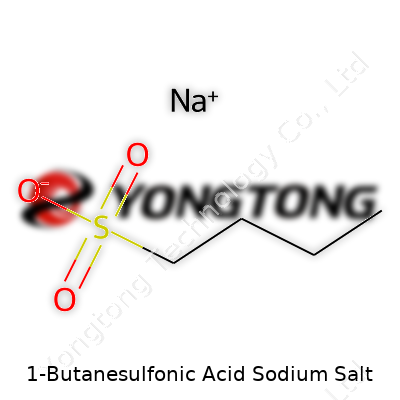
1-Butanesulfonic Acid Sodium Salt belongs to the family of alkyl sulfonates, where a butane chain attaches to a sulfonic acid group, which in turn binds to a sodium ion. This combination gives it both hydrophilic and lipophilic character, letting it work well in water-based environments but still blend with organic molecules. Labs use it most commonly as an ion-pairing agent in high-performance liquid chromatography (HPLC), helping push less polar molecules through columns that might otherwise snag on the packing material. Whether in powder or crystalline form, its role goes far beyond just lab technique—pharmaceutical companies and researchers rely on it as a building block for advances in their fields.
Physical & Chemical Properties
The chemical formula for 1-Butanesulfonic Acid Sodium Salt reads C4H9NaO3S. At room temperature, it forms a white crystalline powder that dissolves easily in water and lower alcohols. Its melting point stays well above 250°C, and the compound resists breaking down under normal conditions, showing strong thermal stability. In terms of reactivity, the intact sulfonate group gives it real strength when dealing with charged species, making it a useful player in a range of chemical reactions without turning volatile or breaking down in light. Its high solubility means that prepared solutions stay stable, and the sodium ion’s presence helps it interact smoothly with both acids and bases.
Technical Specifications & Labeling
Quality matters a lot in lab reagents. Manufacturing facilities must keep impurities—like unconverted butanesulfonic acid or sodium chloride—below strict thresholds, often less than 0.05%. Labeling follows regulatory templates, listing the chemical name, CAS number, purity level, and specific handling instructions. Suppliers stamp batch numbers and storage recommendations right on the packaging, and hazard symbols show up clearly if ingestion, inhalation, or skin contact poses any risks. Researchers who buy this salt for high-sensitivity applications look at these labels first, knowing that any deviation can throw off detection limits and accuracy in analytical tests.
Preparation Method
To make 1-Butanesulfonic Acid Sodium Salt, chemists start with a straight-chain butane derivative, usually 1-butene or butanol, which reacts with sulfur trioxide or chlorosulfonic acid to form the corresponding sulfonic acid. After this, neutralization with sodium hydroxide goes stepwise, adjusting pH to avoid side reactions and loss of yield. Filtration and drying remove leftover solvents and any side products. Modern production lines use closed systems to trap fumes and prevent contamination, optimizing yields for both laboratory and industrial batches in line with industry standards for quality and environmental impact.
Chemical Reactions & Modifications
This sodium salt pulls its weight beyond simple use as a reagent. Chemists rely on its strong ionic character to participate in nucleophilic substitution reactions, where it can hand off its sulfonate group for building new molecules. In cross-coupling, the butane chain serves as a spacer, letting researchers fine-tune the physical properties of larger organic frameworks. The compound also sees selective modification through reactions with halides and through esterification, opening up even more possibilities in building tailored molecular structures for specific research needs or downstream pharmaceutical intermediates.
Synonyms & Product Names
In chemical catalogs, 1-Butanesulfonic Acid Sodium Salt pops up under several names: Sodium n-butanesulfonate, Butylsulfonic acid sodium salt, and Sodium 1-butanesulfonate all refer to the same compound. In technical documents and patent filings, some references shorten it to “SBS” for convenience. Pharmacopeias and analytical suppliers keep strict definitions so researchers don’t swap it for similar sulfonates by mistake—precision in naming goes a long way in such tightly regulated settings.
Safety & Operational Standards
Working with this compound calls for clear safety protocols. While not classified as highly toxic, it acts as a mild irritant when inhaled or when it touches skin or eyes, so eye protection and gloves stand as standard gear in every lab using it. SDS sheets highlight immediate cleanup strategies for spills and outline first-aid measures. Storage guidelines recommend keeping the material in airtight containers away from moisture, since even small contamination with humidity can draw in water and change how it behaves in reactions. Facilities keep neutralizing agents and spill kits close by, drawing from years of experience around hazardous and corrosive agents to set the bar for daily safety.
Application Area
1-Butanesulfonic Acid Sodium Salt plays a core role in chemical analytics, standing out in ion-pair chromatography for pharmaceutical and environmental assays. Labs use it to separate active drug components or pollutants that resist easy detection with standard solvents. Outside the analytical realm, specialty synthetic routes use its strong sulfonate group as a key building block, particularly in the design of surfactants and custom organic intermediates. Polymer science and coatings industries also find applications for its robust ionic behavior, improving the durability and water compatibility of new materials in ways that cheaper or weaker salts cannot match.
Research & Development
Ongoing research keeps shining a light on new uses for 1-Butanesulfonic Acid Sodium Salt. Scientists explore it as a template in the synthesis of porous materials, and pharmaceutical labs keep pushing for higher selectivity by tweaking the salt’s structure for better separation performance. Ongoing collaborations between academia and industry dig into greener synthesis, swapping traditional reagents for smaller, safer, and more recyclable chemicals. That push for innovation keeps the compound relevant even as newer technologies and reagents enter the mainstream—because reliability and predictability matter just as much as novelty in chemical development.
Toxicity Research
Decades of toxicity studies show that the compound carries a low acute toxicity risk under normal lab use, though chronic exposure data remain limited. Animal studies suggest that ingestion in large amounts causes mild gastrointestinal irritation, while levels found in residue after a typical reaction cycle or HPLC run fall far below recognized safety limits. Experienced safety professionals emphasize the importance of immediate washing after spills, using simple soap and water, since long-term contact can still dry or irritate the skin. Airborne dust sometimes triggers mild respiratory symptoms in sensitive workers, so good ventilation and dust control play key roles in industrial settings.
Future Prospects
New developments in precision pharmaceuticals and advanced materials keep driving demand for this compound. With green chemistry efforts growing, manufacturers look for eco-friendly ways to scale production, investing in better waste management and safer byproducts. The surge in bioanalytical research may require further tweaks to its structure to improve selectivity and compatibility with biological samples. Tech companies testing next-generation batteries and fuel cells explore sulfonate-based salts for better ion transport and stability. Long term, 1-Butanesulfonic Acid Sodium Salt will likely stake out new ground, supporting industries that rely on both its chemical toughness and the precision it brings to analytical and synthetic procedures.
A Closer Look at Practical Uses
Ask anyone in an analytical lab about 1-butanesulfonic acid sodium salt and you’ll likely get an enthusiastic answer about chromatography. Over the years, I’ve watched high-performance liquid chromatography (HPLC) shake up the way we analyze everything from pharmaceuticals to water samples. In all that time, some tools never really leave the spotlight, and this sulfonic acid salt stands among them.
In HPLC, getting polar compounds to behave always brings a challenge—basic molecules such as certain drugs don’t always stick to the column in predictable ways. Add a bit of 1-butanesulfonic acid sodium salt, and suddenly, charged molecules settle in for a more meaningful separation. As someone who's worked on quantifying trace impurities in medications, this small tweak means the difference between clear results and a headache of overlapping peaks. The salt acts as an ion-pairing agent, helping retain and separate positively charged molecules, or cations, with far more precision. Regulatory bodies expect this level of detail, especially since the U.S. Pharmacopeia now demands very specific quantitation of these compounds before a drug even reaches the market.
Role in Pharmaceuticals and Research
Not long ago, a pharmaceutical project I worked with struggled to measure hydrophilic drugs. The client needed consistency and sensitivity, and they wanted it without losing time to endless trial and error. Adding 1-butanesulfonic acid sodium salt to the mobile phase changed everything. We went from muddied baselines to sharp, reproducible peaks, which saved days of rework. Keeping these projects on track and in compliance means more than hitting numbers; it means safeguarding patient health by avoiding misidentified or missed contaminants. For academic labs, where budgets and time often run thin, having a tool that can stretch resources really matters.
Food and Environmental Testing
Move outside pharma, and the story continues. Years ago, I volunteered on a water quality project in an agricultural region. Nitrates and pesticide residues kept creeping into groundwater, and we needed rigorous tests to track changes over time. 1-Butanesulfonic acid sodium salt supplied the selectivity we needed for these tricky, charged analytes. In food testing, analysts use it to get clear readings on preservatives, artificial sweeteners, or residues. Lab results here influence the safety checks consumers trust as they reach for groceries every day.
Troubles and Solutions in Implementation
Of course, nothing’s perfect. Over time, labs might see ion-pairing agents build up in chromatography columns, which impacts reproducibility or even shortens equipment life. When troubleshooting for colleagues, I recommend a tight schedule of column flushing and validation checks. Fresh reagents and routine maintenance can dodge most stoppages, making sure results stay reliable and instruments keep humming.
Training matters, too. I’ve mentored new analysts who initially fumbled around with buffer pH and salt concentration. Just a slight adjustment can throw off chromatography, so hands-on guidance and standardized protocols make a big difference. Sharing best practices, backed by solid literature and practical experience, raises confidence and cuts down on mistakes.
Looking Ahead
The needs of the scientific world keep evolving, but some basics stick. 1-Butanesulfonic acid sodium salt keeps its edge by helping deliver answers in medical, food, and environmental labs. It turns out that, for all the new tech on the horizon, small molecules like this one still anchor much of the progress that keeps people safe and healthy.
Examining 1-Butanesulfonic Acid Sodium Salt’s Role in Chromatography
Lab life leaves plenty of room for skepticism, especially when trying to nail down the best mobile phase additives. Anyone who has spent time in front of a High Performance Liquid Chromatography (HPLC) system knows: it’s the details that make or break your separation. When 1-butanesulfonic acid sodium salt steps onto the scene, the lab bench turns into a playground for both opportunity and risk.
How 1-Butanesulfonic Acid Sodium Salt Works in HPLC
This compound’s ability to sharpen or transform peak shapes comes from its strong ionic nature. For people separating tricky bases or highly polar compounds, sprays of hope lie in tuning retention times or resolving closely related species. I see this in pharmaceutical analysis, where peaks run shoulder-to-shoulder and the difference between clean data and a frustrating mess can rest on selecting the right ion-pair reagent.
Ion-pair chromatography depends on soluble salts like this one. The butane tail of 1-butanesulfonic acid sodium salt gets cozy with hydrophobic analytes, and the sulfonate group creates those essential ionic interactions with positively charged molecules. Running analytes with amine functionalities, I’ve watched poor retention become satisfying separation with a tweak of the salt concentration.
Suitability and Practical Benefits
HPLC practitioners value 1-butanesulfonic acid sodium salt for several practical reasons. Its relatively low volatility offers consistent mobile phase composition, without worrying about rapid evaporation or drift. This matters during long gradients or isocratic runs where thousands of injections churn through an expensive instrument. Detection comes easy, too, since the salt rarely interferes heavily with UV detection below 210 nm.
Labs can source this salt at high purity quite easily. Certificates of analysis from respected chemical suppliers promise low levels of heavy metals and other contaminants. Consistency counts just as much as any clever chemical theory, and this additive delivers on that front, especially for validated analytical methods in regulated workflows.
Challenges and Real-World Considerations
There’s no hide-and-seek here. This salt carries baggage. Residues build up in HPLC columns and can be tough to flush from the system. Clogged check valves, stubborn background noise, and aging pumps may all trace their source to frequent use of sulfonic acid reagents. Having worked through enough instrument headaches, I find preventive maintenance and frequent mobile phase changes become routine with these additives in rotation.
Reliability also relies on water quality. Anything less than HPLC-grade brings contaminants that magnify suppression or noise issues during detection. Downstream, mass spectrometry becomes tricky. Sulfonic acids won’t play nicely with electrospray interfaces, so LC-MS work means finding other partners for ion-pairing.
Thinking Toward Solutions
Rotating columns and running dedicated lines for ion-pair methods helps extend system life. Scanning instrument logs for pressure upswings or small baseline shifts before big problems hit saves time and money. Analysts can seek alternative volatility-friendly reagents if mass detection or system longevity sits at the top of the list. Group meetings often evolve into brainstorming sessions about balancing performance, cost, and replacement workload.
Skill grows from seeing both the advantages and the price paid in terms of maintenance and workflow interruptions. Analytical chemists weigh those trade-offs, document outcomes, and ultimately help others make informed decisions. Each lab’s needs shape their answer about using 1-butanesulfonic acid sodium salt, but there’s no denying its potential when the separation demands precision.
Understanding the Need for Proper Storage
Anyone dealing with 1-Butanesulfonic Acid Sodium Salt in a lab or industrial setting soon realizes it’s not just another random chemical. This compound withstands general use in ion-pair chromatography and plenty of analytical applications, and quality really matters. Updating how we store chemicals like this is about more than just avoiding disaster. It’s about making sure every test or product batch stays consistent, safe, and up to regulatory standards.
Choosing the Right Storage Space
I’ve seen mistakes in chemical storage cause everything from ruined samples to lab evacuations. To avoid headaches with 1-Butanesulfonic Acid Sodium Salt, common sense rules of chemical stewardship apply: keep it in a cool, dry place. A tightly sealed container is the first thing I reach for, because air and humidity start breaking down the compound. Moisture can clump the salt or trigger slow reactions, making it less pure and predictable. Moisture-resistant containers earn their shelf space in any chemical room, especially when handling hygroscopic powders or salts. Storing it at room temperature keeps it within the manufacturer’s stability guidelines, and putting it near heat sources or direct sunlight is asking for an expensive lesson.
Keep It Separate and Labeled
When I started out, I worked in a lab that mixed incompatible chemicals too close together. No surprise—a minor spill became a real hazard. Sodium salts like this one deserve their own spot apart from acids or oxidizers. Too many times, rushed storage ends up causing cross-contamination. Dedicated shelves, clear labels, and strict logbooks aren’t just best practice; they’re personal responsibility. Proper labeling prevents dangerous mix-ups and keeps inventories reliable for audits.
Protecting Health and Meeting Standards
Direct contact with 1-Butanesulfonic Acid Sodium Salt can irritate skin or eyes. Even after years in a lab coat, I never skip gloves or eye protection, even for routine handling. Good ventilation where you store chemicals helps disperse any accidental dust or fumes. The Occupational Safety and Health Administration (OSHA) and agencies like the European Chemicals Agency have posted specifics—store away from incompatible substances, keep lids tight, and keep chemical storage spaces locked when not in use. This isn’t just about ticking a compliance box; it keeps people safe and avoids costly violations.
Preventing Waste and Environmental Issues
Improper storage sabotages not just the compound, but also budgets and lab credibility. Degraded chemicals build up over time and become hazardous waste that’s harder to dispose of. In my experience, proper storage cuts down on lost inventory, reduces chemical waste, and limits environmental harm. If a spill does happen, quick response—using the right absorbents and not just a stack of paper towels—prevents bigger messes. Chemical hygiene plans should include steps for neutralizing and cleaning up 1-Butanesulfonic Acid Sodium Salt safely, with trained staff who know the protocol.
Practical Solutions for Better Storage
Putting money into quality containers and climate-controlled storage pays off in longer shelf life and safer workspaces. Training sessions, even for experienced staff, are worth their weight in gold. Storing the compound farther from direct light sources and humidity, and keeping it away from food or drink areas, shows respect for both science and safety.
In the end, handling 1-Butanesulfonic Acid Sodium Salt comes down to treating chemicals with care, knowing the facts, and refusing to cut corners. These habits protect research, budgets, the environment, and above all, the people who make science work.
Understanding 1-Butanesulfonic Acid Sodium Salt
Stepping into any laboratory focused on analytical chemistry, you’ll often spot containers labeled with names that sound heavy—1-Butanesulfonic Acid Sodium Salt fits right in. This compound plays a big part in ion-pair chromatography and has carved out a reputation for reliable performance. Its molecular formula is C4H9NaO3S and it carries a unique CAS number, 2386-54-1. These digits aren’t just for show—they guarantee everyone’s talking about the same substance.
The Real Deal About Chemical Purity
Purity comes first when you’re relying on results that stand up to scrutiny. 1-Butanesulfonic Acid Sodium Salt usually comes in a purity of 98% or higher. Testing for this level means less room for mystery compounds hitching a ride in your sample. Impurities can throw a wrench into chemical analyses, skewing results and wasting precious lab hours.
My own work in pharmaceutical research taught me what low-purity chemicals do to data. If an impurity lands in an active region of an experiment, you end up chasing false leads. For regulated industries, even a tiny amount of contamination can hold up a product batch or send a project back to square one. This isn’t just about perfectionism. Precision saves money, reputation, and time.
Why a CAS Number Tells More Than a Name Ever Could
CAS numbers act as the official ID for chemicals. “1-Butanesulfonic Acid Sodium Salt” spells out what you’re getting, but naming conventions don’t always line up across countries or companies. Confusion grows with isomeric compounds and alternate synonyms. Using the CAS number 2386-54-1 slices through the noise. In logistics, this code keeps orders and stocks in line. In scientific publishing, accurate referencing ensures peers repeat exactly the same experiments.
Memories of shipment delays and inventory mix-ups still come up when I think about labs ignoring CAS numbers. Mixing up similar-sounding compounds costs more than just embarrassment. Unintended substitutions might cause project setbacks that ripple through a research timeline.
What High Purity Brings to the Table
Many research applications call for at least 98% purity. Some suppliers go as far as guaranteeing 99% or higher. This chemical supports ion-pairing in liquid chromatography, where background noise stays low and target analytes stand out. In real lab conditions, lower purity makes it tough to trust peak assignments or quantification.
Researchers expect suppliers to give certificates of analysis—solid proof, rather than trust, that the material matches the advertised percentage. Beyond the lab bench, auditors and regulators ask for this paperwork during product development review. Lacking documentation stops an entire process in its tracks.
Improving Supply Chains for Better Purity
It helps when procurement works with suppliers who stick to consistent batch testing and full transparency. Technology like NMR and HPLC plays a big role in confirming identity and content. Independent third-party analysis acts as a final check for critical projects. Sometimes budgets push buyers toward cheaper, lower-purity options, but the hidden costs nearly always show up in reliability and rework.
Better Practice Starts with Details
Every lab benefits when details like the CAS number 2386-54-1 and minimum 98% purity show up clearly on inbound chemical shipments, records, and experimental protocols. Tightening up on these basics supports every step that follows, from data integrity to product quality. The science grows stronger from there.
Respecting Chemicals in the Lab
Working with chemicals almost daily, certain habits stick—check the label, eye the safety data sheet, and trust experience more than hope. 1-Butanesulfonic acid sodium salt, though not the loudest name in the storeroom, has specific traits that call for careful attention. This white crystalline powder doesn’t jump out as dangerous at first glance, but letting your guard down never ends well in the lab.
Chemical Hazards: Risks Are Real
Sodium butanesulfonate finds its way into many separation and chromatography processes. This doesn’t make it benign. Skin or eye contact can trigger distinct irritation. A splash on bare skin might cause a rash or itching, and eyes burn quickly if a few granules get in the corner. The dust floats up easily if poured carelessly, leading to coughing and a sore throat if you breathe any in—nobody enjoys that. Even though it holds a low acute toxicity rating compared to many industrial chemicals, it shouldn’t be treated casually.
On days where someone forgets goggles or nips off gloves to save time, it rarely takes long before a mistake follows. Chemical burns and respiratory distress get real embarrassing, real fast, especially if a manager notices you hacking up a storm. That’s why I keep extra gloves and goggles at my bench—forgetting them is never worth it.
Safe Handling: Steps that Matter
Lab guidelines aren’t just bureaucracy in action. I learned the value of personal protection when a careless spill forced a run to the sink and a visit to occupational health. Gloves—nitrile or latex—let you wipe away splashes before trouble starts. Goggles protect when dust sneaks up. Lab coats pay off when a stray pinch lands where it shouldn’t. Solid ventilation means less airborne dust: a fume hood is a friend, not an option.
Storage matters, too. Moisture turns this powder lumpy and can reduce its usefulness. I’ve seen a bag clumped beyond rescue after just a few days in open air. Keep containers sealed tightly, and never mix storage with acids or oxidizers. Clean up spills with a damp cloth—not dry sweeping, which sends particles airborne.
Medical Response: No Room for Delay
Minor exposure still needs a reaction. Wash skin with water, flush eyes thoroughly, and get fresh air if breathing feels off. Emergency protocols exist for a reason—don't wait for symptoms to get worse. Doctors might ask for the safety data sheet; being prepared can save time and further injury. Visibility on common first aid steps helps everyone in the lab, and regular safety meetings make a difference—a small reminder can head off a bigger disaster.
Building a Culture of Caution
From my time training students, I’ve seen how respect managed in small moments keeps the big accidents at bay. A comprehensive understanding of 1-Butanesulfonic acid sodium salt’s hazards means fewer unnecessary risks. Update that safety training, keep personal protective equipment accessible, and openly discuss any incidents—mistakes can teach if you let them. Safe handling isn’t about making processes tedious; it’s about everyone leaving work just as healthy as they arrived.